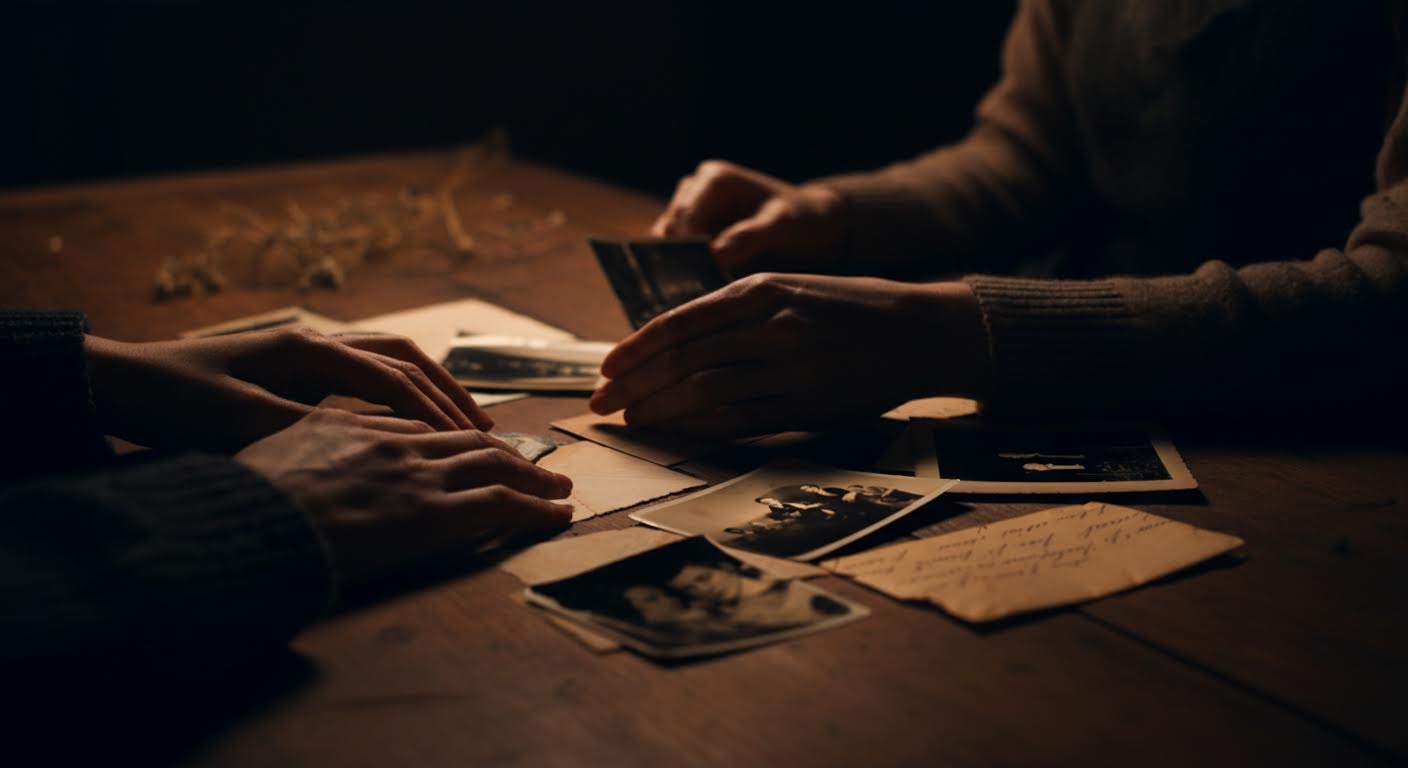
A collaborative family history project is the process by which relatives work together to collect, organize, and preserve genealogical information, oral histories, photographs, and documents. The goal is to create a shared, multi-perspective record of a family's lineage and legacy for future generations to access and build upon.
I remember the exact moment it hit me. My dad was telling a story about his own father, a man I never met, and I realized I had never heard it before. In that silence, a quiet panic set in: how many other stories are just... gone? This is the Legacy Preservation Gap so many of us feel; our research shows 85% of Gen X adults wish they had recorded their parents' voices, but only 12% have a system to do it. The desire is there, but the method is missing.
The problem isn't a lack of love, it's a lack of a plan. Trying to gather memories over scattered emails, chaotic group texts, and public social media feeds is like trying to build a ship in a hurricane. To succeed, you need to stop thinking of it as a casual hobby and start treating it like the most important project your family will ever undertake.
Kinnect is now LIVE! Start your private family group today.
👉 Try Kinnect on the Web
👉 Download the iOS App
Step 1: Define the Scope & Assign Roles
Before you do anything else, decide what 'done' looks like. Is it a digital cookbook of family recipes? A recorded collection of your grandparents' stories? A timeline of immigration? A clear goal prevents burnout. Then, assign roles based on strengths:
- The Interviewer: The family member who loves to talk and ask questions. Their job is to capture the oral history.
- The Archivist: The detail-oriented person who can scan old photos, organize documents, and manage the digital files.
- The Storyteller: The writer who can weave the collected facts and memories into a compelling narrative.
- The Project Manager: The organizer who keeps everyone on track, sets deadlines, and manages the central hub.
Step 2: Establish Your Private, Central Hub
Your project needs a home base. A private, secure, and permanent space is non-negotiable. Public platforms like Facebook are designed for broadcasting, and their business model relies on data mining—not ideal for sensitive family memories. A dedicated platform ensures every photo, document, and story is safe, organized, and accessible only to your family, forever.
Navigating the Human Side of Shared History
The Hidden Variable: It's a Project, Not a Scrapbook
Here’s the insight other guides miss: family history initiatives fail not from a lack of interest, but from a lack of structure. When you treat it like a casual scrapbooking hobby, it gets pushed aside by life's daily demands. When you treat it like a managed project—with a leader, clear goals, and a dedicated workspace—it gets done. This approach also provides a framework for navigating sensitive topics or conflicting memories, because the goal isn't to be 'right,' but to document all perspectives as part of the shared digital legacy.
This process of actively sharing stories does more than just create an archive; it strengthens the family itself. Research shows that in families with regular storytelling traditions, children exhibit 37% higher scores on family cohesion measures than those without (Source: Journal of Family Psychology, 2008). You're not just saving the past; you're investing in your family's future connection.
The biggest hurdle isn't finding the stories; it's creating a permanent, private home where they can live, organized and safe. A place free from the noise of public social media and the chaos of group texts. Kinnect was built to be that digital hearth for your family. It provides a single, secure space where you can organize files, tag photos, record voice notes of your elders, and build your shared history together, ensuring it's never lost.
Frequently Asked Questions
How do you write a family history for a family reunion?
For a reunion, focus on a single, engaging theme like 'Our Family's Journey to America' or 'Three Generations of Family Recipes.' Create a visual timeline with key photos and short anecdotes. This makes the history accessible and creates a focal point for conversation rather than an overwhelming book.
How do you create a family history narrative?
Start by choosing a central character or event as your anchor. Gather facts, dates, and documents, but then focus on the 'why'—the motivations, challenges, and emotions behind the events. Weave together interviews, letters, and photos to tell a story, not just list facts.
What is a family history project?
A family history project is a collaborative effort to document and preserve a family's stories, genealogy, and heritage. It moves beyond a simple family tree by incorporating personal memories, photos, audio recordings, and cultural traditions to create a rich, multi-generational for the future.
How do I start a family history project?
Begin small by choosing one specific goal, like interviewing your oldest living relative or digitizing one box of old photographs. Assign a project manager, choose a private digital platform to store everything, and set a simple, achievable first deadline for the family to meet.
Learn more at Kinnect.
